
Lamp Transmission Record of Humanistic Buddhism by Venerable Master Hsing Yun

About the Book
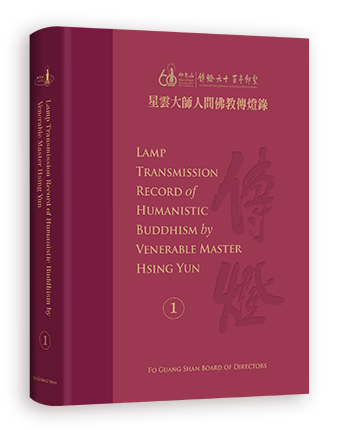
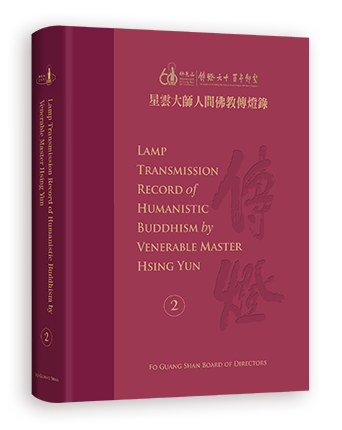
The Chinese edition of the Lamp Transmission Record of Humanistic Buddhism by Venerable Master Hsing Yun was published in 2025 as a three-volume set by the Fo Guang Shan Board of Directors under the general supervision of Most Venerable Hsin Bau, with overall guidance from Venerable Tzu Hui and chief editorship by Professor Cheng Gongrang. Collectively compiled by members of the Fo Guang Shan community, the work systematically presents Venerable Master Hsing Yun’s thought and practice of Humanistic Buddhism, covering its doctrinal foundations, modern development, institutional formation, global propagation, and contemporary spiritual practice.
The set is organized into ten chapters, covering the theoretical framework of Humanistic Buddhism, its practical development, the growth of the monastic community, the role of lay followers, the integration of Buddhist culture and faith, the modernization and internationalization of Buddhism, cross-strait exchanges, the future direction of Buddhism in Taiwan, and contemporary methods of spiritual practice. Systematically presenting Venerable Master Hsing Yun’s thought and practice of Humanistic Buddhism, the work serves as an ideal gateway to understanding the Complete Works of Venerable Master Hsing Yun, helping readers gain deeper insight into the essence of Humanistic Buddhist philosophy.
For the English edition, the material has been reorganized and expanded into a projected six-volume series in order to better accommodate the structure, annotations, and readability of the translated text for an international readership. At present, the first two English volumes (Vol. 1 & 2) have been completed and published in June 2026, while translation and editorial work on the remaining volumes is ongoing, and will be published in full by September 2027.
As additional texts are translated and published, the catalogues and reference materials will continue to be updated accordingly. In the interim, if a cited work cannot be found in the English catalogue or among available translations, it may be assumed that the text presently exists only in its original Chinese form.
Editorial Preface Taking the Master's Mind as Our Own Mind, Taking the Master's Aspiration as Our Own Aspiration
The Editor's Preface explains the origin, compilation process, and purpose of the Lamp Transmission Record of Humanistic Buddhism by Venerable Master Hsing Yun. The preface quotes from the self-preface to the Complete Works of Venerable Master Hsing Yun, presenting how the Venerable Master's life transcended eras, regions, and communities, and how he devoted himself wholeheartedly to the propagation of Buddhism and service to society—embodying the spirit of Humanistic Buddhism.
In order to continue the Venerable Master's vision of promoting Humanistic Buddhism, the editorial team, under the guidance of Venerable Tzu Hui and Professor Cheng Gongrang, reviewed more than forty million characters of the Venerable Master's writings and distilled ten major contributions that he made to the development of Humanistic Buddhism, which form the structural framework of this book.
The title Lamp Transmission Record of Humanistic Buddhism by Venerable Master Hsing Yun symbolizes the continuation of the Dharma life and the transmission of its living flame. This work is intended to serve as a guide for readers to understand the Venerable Master's thought and to enter into the Buddha's original intent. The volume also includes appendices such as the Venerable Master's biography, a chronological record of major events, and information related to the Complete Works, providing readers with a comprehensive contextual reference.
More than a compilation of the theories and practices of Humanistic Buddhism over the past century, this book also represents the disciples’ aspiration to “take the Master's mind as our own mind, and the Master's aspiration as our own aspiration.” It is our hope that Fo Guang disciples will continue to articulate systematically the theoretical thought of Venerable Master Hsing Yun's Humanistic Buddhism, thereby illuminating the future path of Humanistic Buddhism in the world.
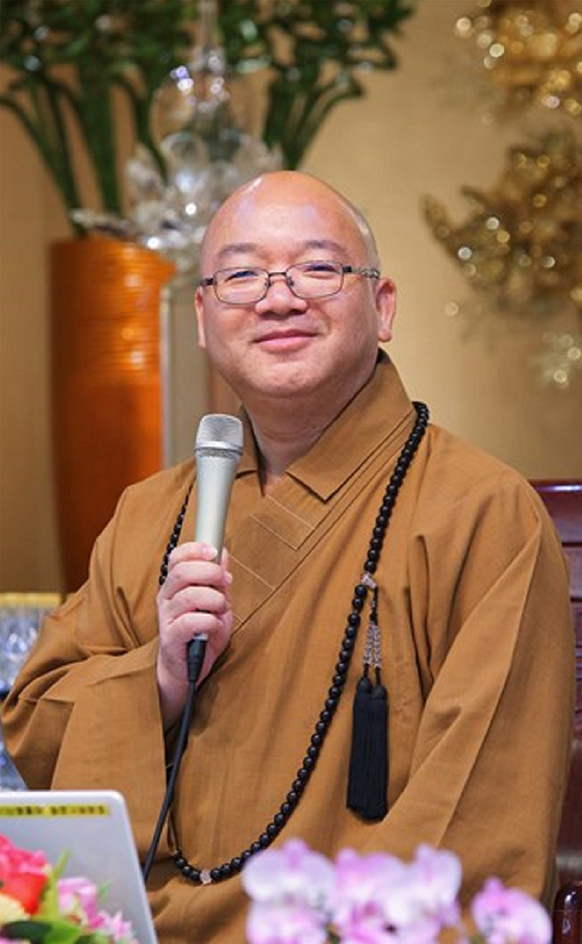
Foreword 1 Humanistic Buddhism: Handing Down the Lamp to the World Most Venerable Hsin Bau/Head Abbot of Fo Guang Shan
This foreword is written by Most Venerable Hsin Bau, Abbot of Fo Guang Shan, and serves as the opening to the Lamp Transmission Record of Humanistic Buddhism by Venerable Master Hsing Yun. It reflects on the continuation of the Dharma work in the two years since the Venerable Master's passing, and explains how Fo Guang disciples, upholding the spirit of “taking the Master's aspiration as their own,” continue to advance the development of Humanistic Buddhism.
The text points out that throughout his life Venerable Master Hsing Yun was devoted to realizing the Buddha's original intent. He advocated that the Dharma should respond both to doctrinal principles and to the needs of the times, and that it should be integrated into everyday life, thereby creating a path of practice that is both accessible to the public and grounded in daily living.
In order to present the Venerable Master's thought in a clear and systematic manner, Fo Guang Shan has distilled key materials from the Complete Works of Venerable Master Hsing Yun and compiled them into the Lamp Transmission Record of Humanistic Buddhism by Venerable Master Hsing Yun. This publication not only provides a foundation of study for those engaged in the propagation of the Dharma, but also enables readers to grasp the theories and methods of Humanistic Buddhism in a systematic way.
Much like works such as the Fayuan Zhulin and Yuezang Zhijin, which guide readers in approaching the vast corpus of the Buddhist canon, this book serves as a guide for readers entering the teachings of Venerable Master Hsing Yun. Through the Lamp Transmission Record of Humanistic Buddhism by Venerable Master Hsing Yun, readers are able to gain a systematic understanding of the core meaning of the Venerable Master's Humanistic Buddhist thought.
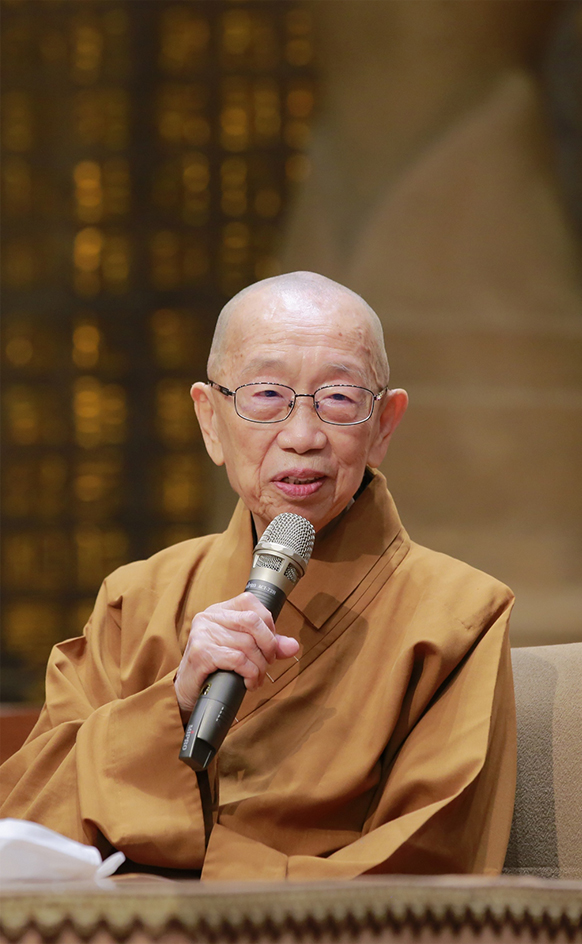
Foreword 2 The Propagation of Humanistic Buddhism: Upholding the Buddha's Original Intent Venerable Tzu Hui/Executive Assistant to the Founding Master of Fo Guang Shan
This foreword, written by Venerable Tzu Hui, explains the origin of the compilation and the core spirit of the Lamp Transmission Record of Humanistic Buddhism by Venerable Master Hsing Yun. The text notes that throughout his life Venerable Master Hsing Yun followed in the footsteps of the Buddha, realizing the Buddha's original intent—to “teach, guide, benefit, and bring joy, enabling all beings to awaken to and enter the Buddha's knowledge and insight.” This understanding became the guiding purpose of Humanistic Buddhism.
Venerable Master Hsing Yun firmly believed that the Dharma should respond to the needs of the human world. Emphasizing the equality of Buddha-nature and the principle of dependent origination and emptiness, he was committed to bringing Buddhism from the mountains into society and transforming it from a matter of belief into a way of life.
To carry forward the Venerable Master's spirit of Dharma propagation, Fo Guang disciples compiled the Lamp Transmission Record of Humanistic Buddhism by Venerable Master Hsing Yun from among his more than forty million characters of writings. The aim is to assist readers in gaining a deeper understanding of the theory and practice of Humanistic Buddhism.
The preface also recalls the Venerable Master's personal pilgrimages to the sacred sites of the Buddha and his global efforts in propagating the Dharma. It concludes with a call for all to support and sustain this endeavor so that the lineage of Humanistic Buddhism may continue to flourish and illuminate the world.
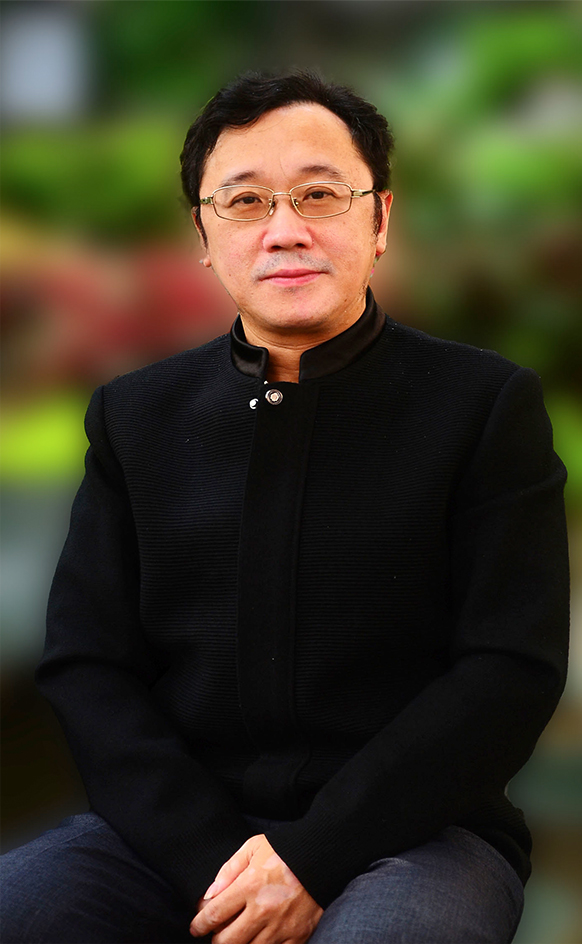
Overview Venerable Master Hsing Yun: A Beacon of Modern Humanistic Buddhism Cheng Gongrang/Director, Center for Buddhist Thought and Humanistic Buddhism Studies, Shanghai University
This Overview is written by Professor Cheng Gongrang and offers an in-depth discussion of Venerable Master Hsing Yun's representative position in the development of modern Humanistic Buddhism, particularly highLamping his significant contributions to both theoretical construction and practical implementation.
The text explains that with Humanistic Buddhism as its central guiding concept, the Venerable Master actively promoted the modernization, everyday application, and internationalization of Buddhism. Through the Four Objectives of Fo Guang Shan—culture, education, charity, and spiritual cultivation—he concretely embodied the Buddha's teaching that places human beings at the center and emphasizes the realization of the Dharma in the human world.
By founding Fo Guang Shan, the Venerable Master established an organizational system integrating both monastic and lay communities, advancing the institutionalization and globalization of Buddhism. In doing so, he helped transform Buddhism from a predominantly Chinese model into a global one, making it a significant example of religious transformation in the modern world.
The article also emphasizes the symbolic meaning of the “transmission of the lamp” (chuandeng). In early Buddhism as well as in Mahāyāna traditions, the metaphor of the lamp is often used to signify how the Dharma dispels ignorance and illuminates darkness. The Buddha's teachings are regarded as the “lamp of the Dharma,” and the continuation of this wisdom is expressed through the act of “transmitting the lamp.” Through both his words and personal example, Venerable Master Hsing Yun has ignited countless lamps of wisdom, carrying forward the Buddha's compassion and insight.
The compilation of the Lamp Transmission Record of Humanistic Buddhism by Venerable Master Hsing Yun is therefore intended to continue this lamp of wisdom—systematically transmitting the spirit of the Venerable Master's Humanistic Buddhism to future generations, so that the Dharma lineage may remain ever luminous and the life of wisdom may continue without interruption.
Contents
Chapter One: Constructing a Systematic Theoretical Framework for Humanistic Buddhism
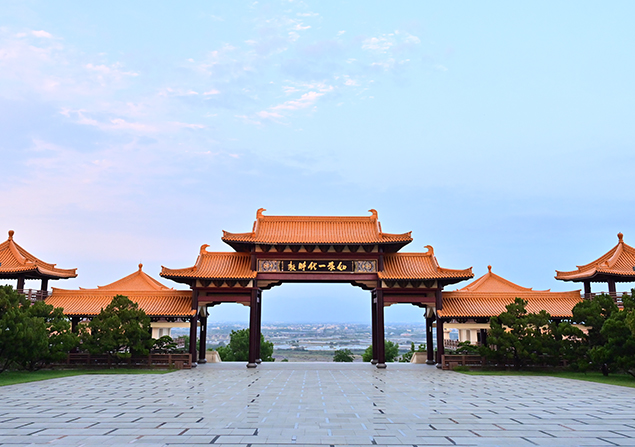
Fo Guang Shan Sutra Repository
Chapter One examines how Venerable Master Hsing Yun theoretically articulated and systematized Humanistic Buddhism, forming a comprehensive framework grounded in profound doctrinal thought and oriented toward practical application. The chapter unfolds through four dimensions.
First, the essence of the Dharma, which emphasizes returning to the Buddha's original intent as the foundation, integrating faith in the Three Jewels with the concept of universal Buddha-nature, thereby establishing the doctrinal legitimacy of Humanistic Buddhism.
Second, the forms of the Dharma, which focus on integrating Buddhist teachings into modern society and everyday life through various approaches such as Dharma propagation, spiritual practice, public lectures, media dissemination, and interreligious dialogue, thus promoting the presence and accessibility of the Dharma in the human world.
Third, the wisdom of the Dharma, which highLamps the integration of prajñā (wisdom) and upāya (skillful means), advocating the transcendence of dualistic thinking and the realization of the insight that “this very world can be the Pure Land.”
Fourth, the definition of the Dharma, which adopts the criteria of “what the Buddha taught, what people need, what purifies the mind, and what is virtuous and beautiful” as guiding principles that unify both theoretical understanding and practical direction.
Overall, the chapter demonstrates how Venerable Master Hsing Yun, in response to the challenges of modernity and globalization, harmonized tradition with innovation to construct a theoretical system of Humanistic Buddhism characterized by universal values, an open perspective, and practical applicability, thereby providing a clear vision and methodological guidance for the future development of Buddhism.
Chapter Two: Deepening and Broadening the Development of Humanistic Buddhism at the Practical Level
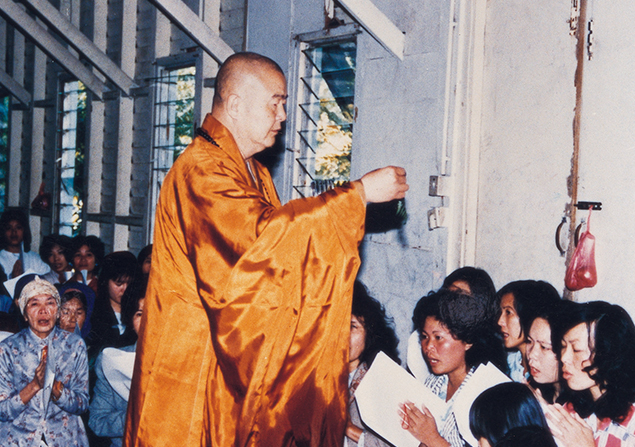
Venerable Master Hsing Yun was invited to officiate a Triple Gem Refuge Ceremony.
Chapter Two focuses on the practical dimension of Venerable Master Hsing Yun's promotion of Humanistic Buddhism. It examines the four major dimensions—culture, education, charity, and collective cultivation—demonstrating both the depth and breadth of his vision for Buddhist engagement in society.
1. Cultural Vision:
The chapter explains how the Venerable Master, from an early stage, used literature as a means of enLampenment and reform, promoting Buddhist renewal through writing, editing, and cultural initiatives. His cultural endeavors extended across diverse fields, including the arts, music, and publishing, guided by the principles of “what the Buddha taught, what people need, what purifies, and what is wholesome and beautiful.”
2. Educational Vision:
Venerable Master Hsing Yun advocated that “Buddhism is education.” From founding Buddhist institutes to initiating the “Millions of People for Education” movement, he established an educational system that integrates both monastic and lay communities, as well as religious and secular learning, embodying the global educational vision of Humanistic Buddhism.
3. Charitable Vision:
Beginning with the cultivation of compassion in his childhood, the Venerable Master developed a global system of social care closely connected with education. He emphasized that compassion should evolve from “tangible giving” to “formless giving.” Through the establishment of numerous institutions that provide lifelong care and through international relief efforts, he implemented the principle of compassion as the foundation and skillful means as the gateway.
4. Collective Cultivation:
The Venerable Master stressed the principle that “I am within the community, and the community is within me.” Through Dharma assemblies, reading groups, international exchanges, and innovative forms of Dharma propagation such as music and sports, he enabled Buddhism to become a practical force for fostering social harmony and promoting world peace.
Taken as a whole, the chapter illustrates how Venerable Master Hsing Yun realized the Buddha's original intent through concrete action, transmitting the lamp of the Dharma through institutionalization, diversification, and internationalization. In doing so, Humanistic Buddhism has been able to illuminate the world and become deeply integrated into everyday life.
Chapter Three: Development of a Monastic Community for Contemporary Humanistic Buddhism
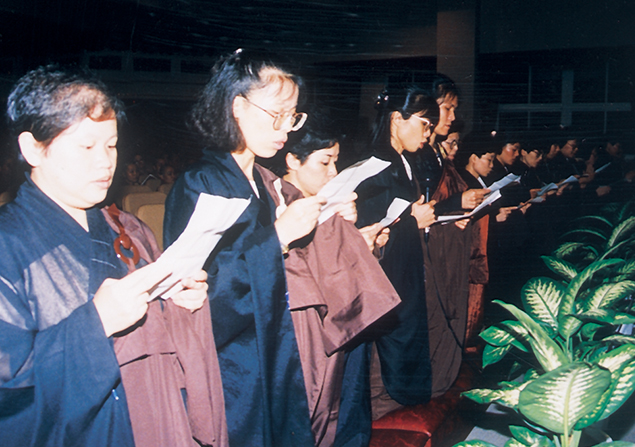
Fo Guang Shan held its first śikṣamāṇā initiation ceremony on August 20, 1992.
Chapter Three explains how Venerable Master Hsing Yun vigorously promoted the development of a modern monastic community for Humanistic Buddhism, establishing the contemporary model of the Fo Guang Shan Sangha community through its guiding principles, institutional structures, educational system, and global Dharma propagation.
The chapter first reviews the Venerable Master's journey from Leiyin Temple in Yilan to the founding of Fo Guang Shan. It points out that he regarded education and institutionalization as the core of Sangha development. Through the Fo Guang Shan Pure Regulations, he implemented key principles of governance: “collective creation, institutional leadership, undertaking only what accords with the Buddha, and relying solely on the Dharma.”
Venerable Master Hsing Yun also redefined the traditional teacher–disciple relationship, grounding it in equality and emphasizing that disciples do not belong to any individual teacher. At the same time, he stressed the importance of integrating modern knowledge with Buddhist learning in order to cultivate monastics capable of serving globally.
He further encouraged the Sangha to engage in social service and international exchange, embodying the balanced practice of understanding and application. The chapter concludes by summarizing Fo Guang Shan's six major contributions: institutionalization, the establishment of a comprehensive educational system, global Dharma propagation, the promotion of culture and education, joint practice between monastics and lay followers, and the integration of culture. Together, these achievements have made Fo Guang Shan a model for the globalization of Humanistic Buddhism.